Why this case matters
This is the clearest way to understand what Combotto sells.
The system in scope was a Rust-based IoT gateway running on Raspberry Pi. The commercial question was not “can you review the whole platform?” It was narrower and more useful:
Can one gateway path be audited fast enough to expose the real transport, auth, and guardrail gaps, then checked again after hardening so leadership and engineering can see whether posture actually changed?
That is exactly what happened here: first the path was reviewed before hardening, then it was checked again after the changes were in place.
Before hardening
Audit
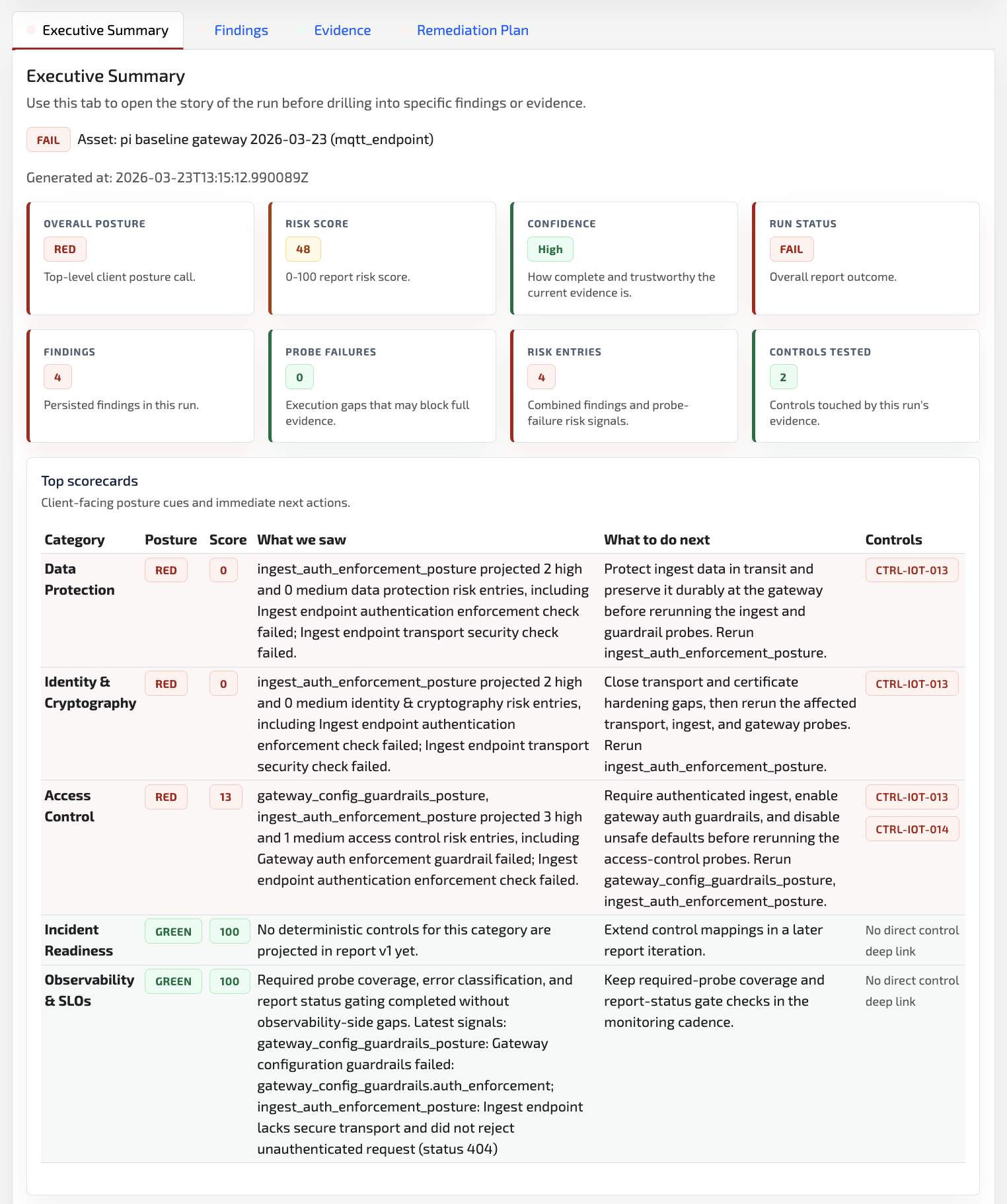
The review came back red, with four findings across ingest auth, insecure transport, and gateway guardrails.
After hardening
Sprint verification
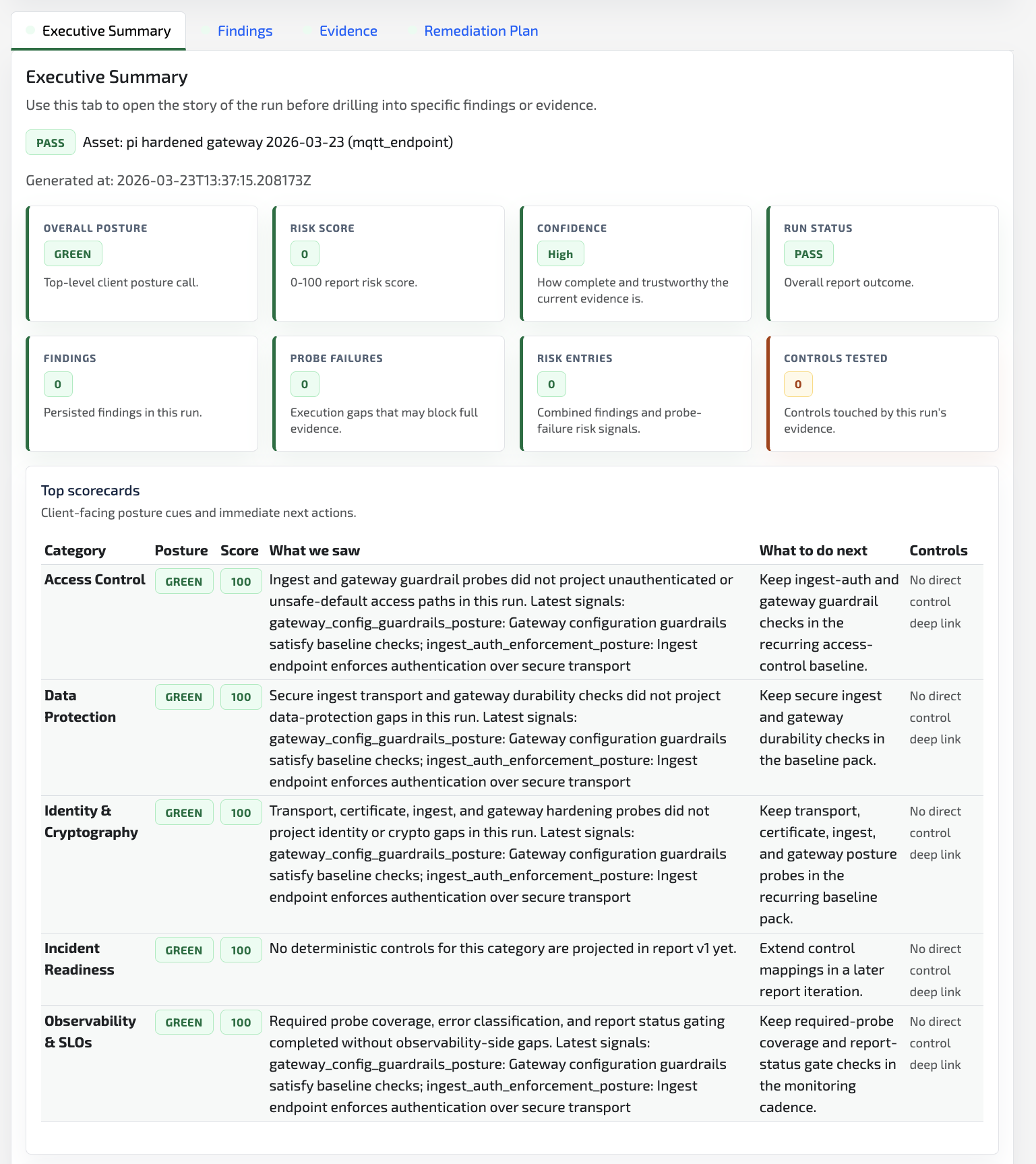
The follow-up check came back green, with zero findings and a hardened state on the same path.
Ongoing review
Retainer review
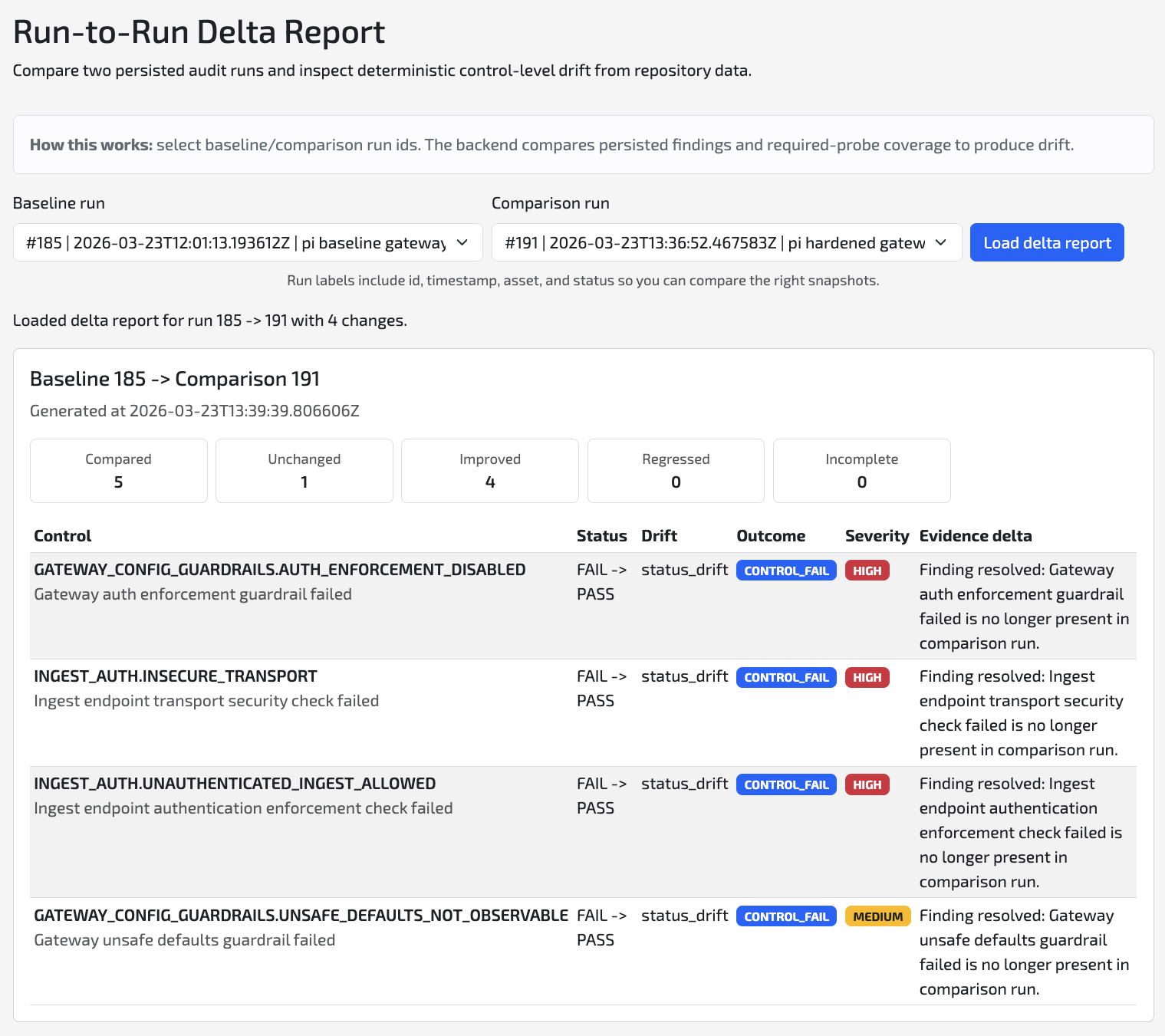
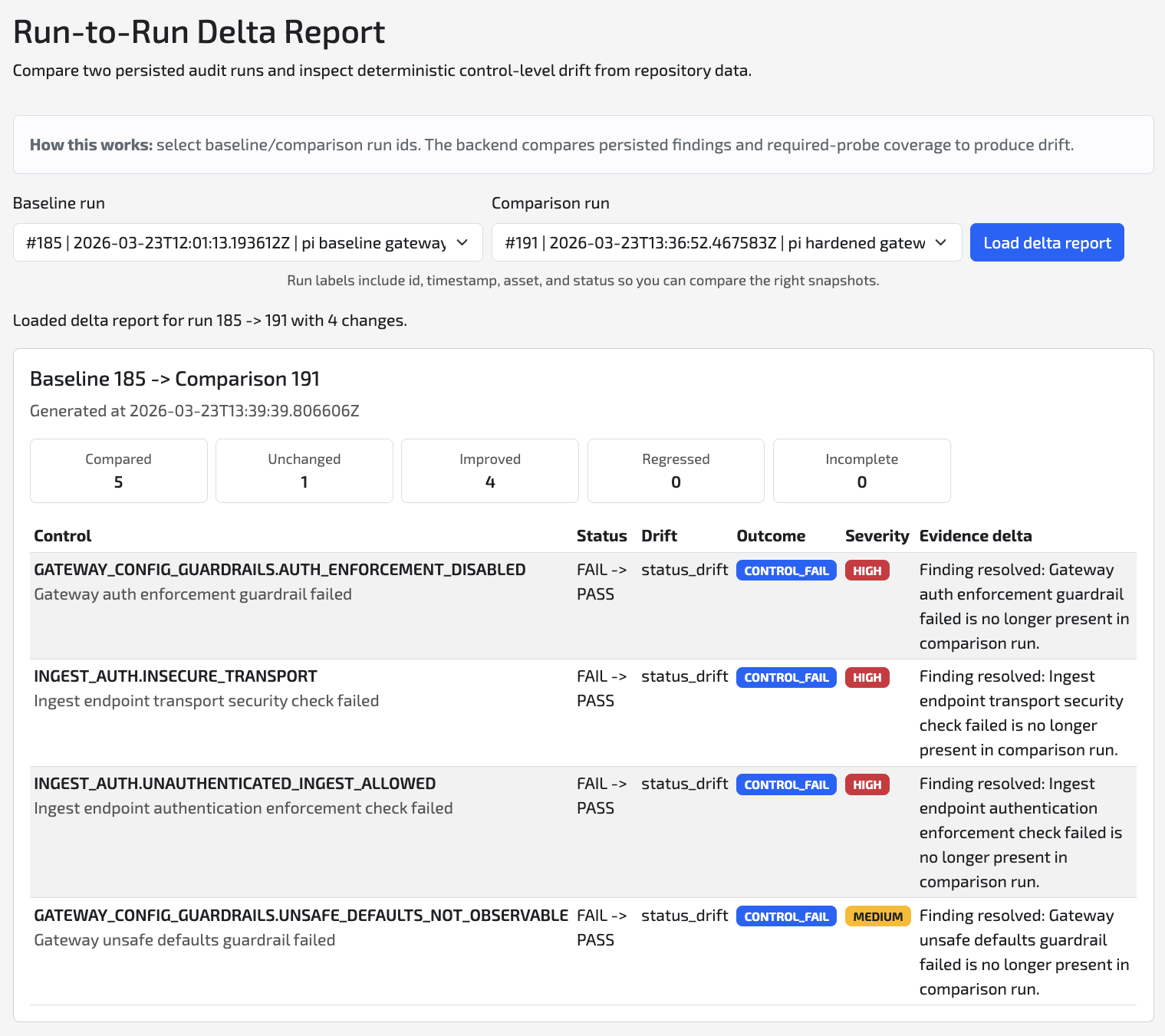
The delta report shows what improved, confirms there were no regressions, and gives future releases a clear reference point.
The audit exposed concrete risk, not vague concern
The before-hardening audit produced a decision-ready picture in one pass. The report came back with:
4total findings3high-severity findings1medium-severity finding- a red posture across Identity & Cryptography, Access Control, and Data Protection
The four findings were specific:
gateway_config_guardrails.auth_enforcement_disabledgateway_config_guardrails.unsafe_defaults_not_observableingest_auth.unauthenticated_ingest_allowedingest_auth.insecure_transport
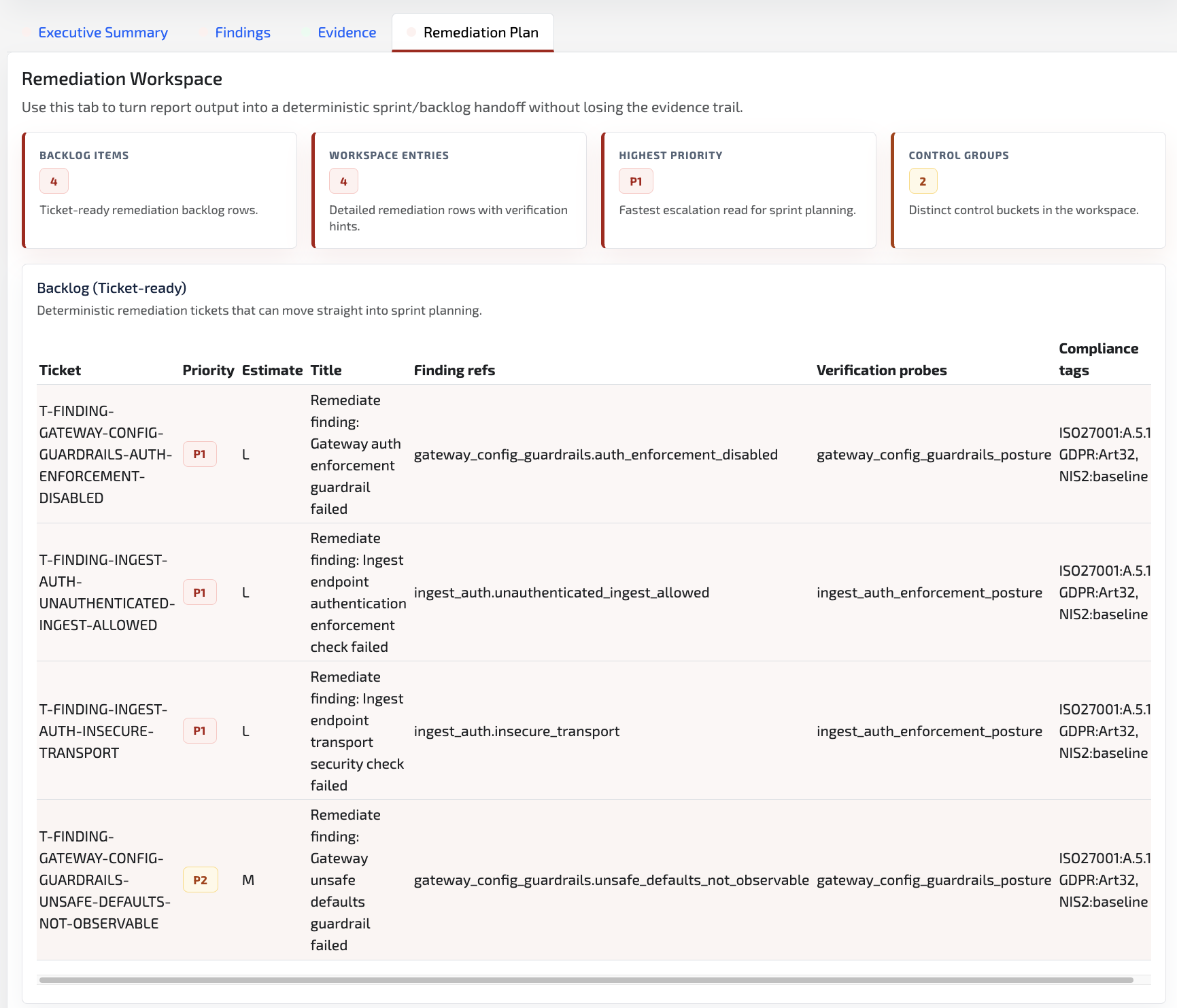
This matters commercially because it turned a gateway hardening discussion into a scoped backlog with owners, verification logic, and a clear reason to run a focused sprint.
What the hardening sprint actually changed
The sprint was not framed as “improve security in general.” It was framed around the exact failure modes the audit exposed.
| Before the sprint | After the sprint |
|---|---|
| Ingest still accepted insecure transport. | The ingest path moved to verified HTTPS and the after-hardening check targeted https://192.168.1.91:8443. |
| Unauthenticated ingest could still reach the boundary. | The ingest path rejected unauthenticated requests and enforced bearer-token auth. |
| Gateway guardrails still failed on auth enforcement and unsafe defaults. | Gateway configuration guardrails satisfied the same checks in the after-hardening review. |
| A later review would have no clean reference point. | The hardened result became the reference point for future reviews. |
The runtime verification matters as much as the configuration change:
- unauthenticated
POST /v1/ingestreturned401 - authenticated
POST /v1/ingestreturned202 - the gateway stayed healthy after the hardening work
That is the difference between “we think it is fixed” and “the same path behaved differently after hardening.”
The after-hardening check proved the fixes held on the same slice
The after-hardening check did not widen scope. It rechecked the same gateway-centered path after the sprint work.
The result:
- audit status
PASS - overall posture
Green - overall risk score
0 0findings0backlog items required
This is where the Combotto offer becomes easier to buy:
- the
Auditmade the risk easy to understand - the
Sprintfixed the highest-impact issues first - the after-hardening check created evidence strong enough to support a lighter
Retainercadence instead of a fresh investigation
Delta reports are what turn a one-off hardening win into a retainer surface
The flagship proof is not just the green follow-up review. It is the ability to compare the before and after state without changing the story shape.
That is what the delta report provides:
- it shows which controls improved
- it confirms there were no regressions
- it gives the next release or monthly review a hardened reference point to compare against
Why this is useful to buyers
Buyers usually do not need a generic promise that an IoT consultant can help. They need to know what happens after they expose one risky path.
This case study shows that the output is:
- a leadership-readable posture call
- evidence-backed findings tied to the live path
- a sprint-ready backlog
- an after-hardening check that proves the change
- an ongoing-review reference point that supports future release or monthly review
That is the full Audit -> Sprint -> Retainer path in practice.
Best-fit situations for a similar engagement
This kind of audit-first hardening work is a strong fit when:
- a customer or procurement review is closing in
- the gateway, broker, or ingest path is moving from prototype assumptions into production pressure
- the team needs proof on auth, TLS, or reliability posture without auditing the whole estate first
- leadership needs a decision-ready picture before approving a broader hardening spend
Next step
If your gateway path is under similar pressure, scope the smallest useful slice first.
Send the asset or path under review, what is creating urgency, and the decision window. Combotto will reply with a fit check, suggested audit scope, and whether the likely next move is an audit only, a focused sprint, or a retainer-ready validation cadence.